“Hello BONJOUR”: Discovering Acadian Pride and Heritage in New Brunswick
It’s safe to say I had no expectations when I arrived in Moncton that summer of 2023, during my Atlantic-Coast-Digital-Nomad Summer. I had to give New Brunswick a go, and Moncton was the right hub between Halifax and PEI. It was also the right opportunity to finally visit the famous Hopewell Rocks nearby, a must-visit on my Atlantic Canada list.
Unlike my time in Saskatoon, where I had no idea what to expect, I had heard a few stories and noticed that this province was rarely brought up in conversations about Canada. If this time my expectations were low, it’s because the world around me kept it this way.
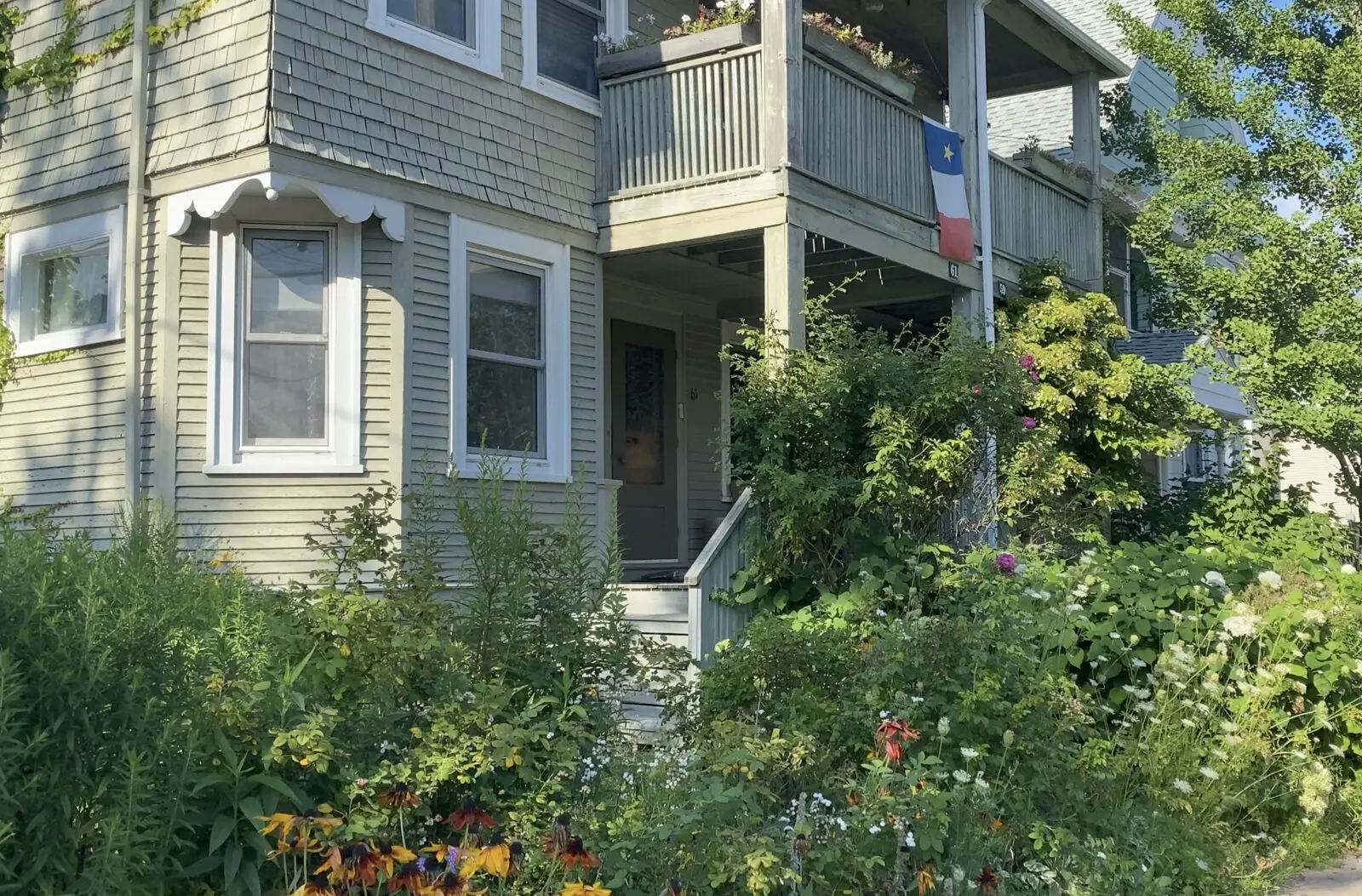
I arrived by bus from Halifax, and walked 20 minutes to my Airbnb. I was immediately charmed by the residential streets: classic 19th-century Victorian homes, perfectly green, cut grass, bushy tall trees giving great shade on the street, and quaint flower arrangements in front of the houses. It was quiet too, not crowded, with cars driving slowly and cats chilling on the sidewalks.
I Airbnb’d a room in a house with four cats, which was the main reason I booked it. I loved having them pass by my room, feigning disinterest until they caved to raging curiosity about everything I brought in, sniffing around every corner. During the week, while I was working, they came in by turns, meowing at my door to investigate the room. I spent my morning coffees by their side on the patio, petting the kitten and breaking up fights between the male and the new mother. One night, the female cat came to cuddle in bed and watch Netflix with me. One day, when out for my lunch break, the male cat, a chubby orange cat, followed me in the rain up the street until he turned around. Such a welcome was hard to beat for a first impression of New Brunswick.
Food was also a big surprise in Moncton. Being on the road constantly forces you to look for cafes, bistros, and restaurants for your meals and at some point, especially as a picky eater, you get tired of the same food and menu offerings. Not in Moncton, though! I actually struggled to hit all the places I shortlisted on Google Maps. Great Italian place, cozy Japanese sushi spot, plenty of stylish cafes and warm, homey lunch menus. Even delicious bakeries.
It was actually in this one fancy bakery that I had my first Canadian bilingual culture shock. When ordering the viennoiseries, the woman noticed my accent and immediately switched to French with such ease that it caught me off guard. I knew New Brunswick was a bilingual province, but I didn’t know how many people there were who would actually be bilingual. Tickled, I started playing a game where I would greet anyone with a lazy French accent and let them decide whether to switch to French for me. My greetings became “Hello BONJOUR”, in the hope my first language would win out. And to my personal satisfaction, it did many times!
You need to understand, in all these years in Canada, speaking French was only useful when I was in Quebec and wanted faster phone customer service with my bank. Suddenly being able to choose which language I want to speak, and seeing them switch from perfect English to perfect French, absolutely blew my mind. I truly wondered: how are they not the elite of this country, with such ease with our two official languages?
Of course, I had basic knowledge about the Acadian culture, and it was hard to miss with Acadian flags decorating front porches and streets. My visit to Moncton was only a few days after the “15 Août”, the official Acadian day, but I want to believe these flags are waving all year long. Seeing the French tricolour with the bold golden star everywhere sparked an instant connection. There’s a distinct pride in sharing a language and heritage with a people who held onto their French identity after everything went down in the 1750s.
In Shediac, by the Gulf of Saint Lawrence, I saw Acadian pride built into the Cabines de Plage, the small wooden changing cabanas beachgoers use on Parlee Beach. I learned they’re actual vestiges of Shediac’s past as a resort hub for European travellers chasing the warmest saltwater in Canada from the mid-20th century. These historical structures were eventually painted in Acadian colours, complete with the yellow Stella Maris star. And of course, above the Giant Lobster statue that brought me to Shediac in the first place, another Acadian flag waved alongside the Canadian and provincial ones.
Finally, my time in New Brunswick ended in Hopewell Rocks, the main tourist destination on my list. I had originally planned out a kayak trip during high tide, but the weather changed, and high winds and heavy waves were tipping kayakers over. I was offered the option to cancel my excursion if I was not comfortable braving the elements for what was supposed to be a fun experience. I immediately accepted and watched the iconic rock formation from safe ground instead. First from the ocean floor during low tide, and then from higher ground when the fast tide came back in. Here I was, ticking off places from the Air Canada safety video, one after another this summer.
I felt proud to be there, enriched by everything I had discovered simply by staying curious and open to a place so many dismiss. Needless to say, New Brunswick now ranks high in my book, so much so that I eventually returned for more. But that’s a story for another time.