Saskatoon, The Unexpected Gem Halfway Through The Country
My time in Saskatoon didn’t start the way I had planned it. In 2018, when I travelled across the country with my dad, the plan was to bus our way from Banff to the northern Saskatchewan city with Greyhound. The Alberta/Saskatchewan connection was run by a subcontractor, which had also ceased operations between the time I purchased the tickets and the travel date, and no one ever told us. Big bummer.
It was only after waiting hours for what I thought was a very, very delayed bus and making four desperate calls to customer service that I was finally informed of our misfortune. We eventually made it to Saskatoon early the next morning on an overnight bus, dejected and very tired.
What started as a very sad story became, hour by hour, one I am now pleased to tell.
That morning, after dropping our luggage at the hotel, too early even for an early check-in, we walked the sleeping streets of Saskatoon in search of what would lift our spirits and help us get back into a normal rhythm: coffee and fresh food.
On top of being inexplicably jet-lagged and feeling wronged, being in a big city was quite a change of scenery for us, as we had just spent a week in the Rockies. We spotted a few cafes and restaurants that would offer cuisines we hadn’t tried yet on this trip, such as Cajun and Filipino.
With all the transport mess, I had forgotten why we were here. Right! The Paris of the Prairies. Since Saskatoon was on a logical path from West to East, I figured it would be worth visiting a city with such a nickname. Being there and looking around, I couldn’t quite see the reference to the French capital.
As the day unfolded, the streets grew more congested, and we noticed workers setting up for a festival. The banners on the light poles announced a Jazz Festival. Right! The travel guide that helped me map the itinerary for this cross-country trip had also mentioned the Jazz culture. I was still missing the Paris link.
For once on this month-long cross-country trip, I had booked my dad and me into a nice hotel, since prices in the city were much more reasonable than elsewhere on our journey. When it was time for us to early-check-in, we rushed to our room. The sight of two queen beds in a plush room with a sleek bathroom lifted our weary traveller souls.
Once settled in, I looked up the Festival online and discovered that Ben Harper was headlining that night. My dad and I exchanged a long look, both of us questioning whether we wanted to spend the first hours of the night out again, to see this artist we both liked. The ticket prices were also in our budget, so we agreed to make the most of the situation and attend the show. While in Rome (or in the Paris of the Prairies).
It was the first time we had attended a public event since the beginning of our trip three weeks earlier, and we discovered one of the Canadian traditions: the portable folding chair. While in the queue for the field in front of the stage, I noticed many guests holding their foldable chairs or even sitting in them as the line moved up.
Once on the field, spectators had perfectly lined up their chairs six meters from the stage for a better view, and everyone was setting their chairs in a perfect straight line behind.
We opted to lie on the grass and just enjoy the double view: the so Canadian alignment of folding chairs and the scene. The opening act was a singer from Winnipeg named Begonia whose incredible voice and talent struck me immediately. Her music, pop and joyful, lifted the whole field. She became, through her 45-minute set, my favourite Canadian artist. Then it was time for Ben Harper and his musicians to grace us with hours of legendary blues music.
Despite this incredible first day, the best part was finally sleeping in a very comfortable bed.
The following day, on our quest to discover more about the city and the region, we visited a museum that, to me, remains one of the most insightful experiences I’ve had in Canada: the Western Development Museum. Inside, it retraces the history of the West and how the Prairies became what they are today, growing through waves of European migrants who worked the land to make a living, along with the Métis, who have lived there for centuries. I learned how the completion of the Canadian Pacific Railway between the two coasts helped bring EVERYTHING to this region, including food, stocks, farming equipment, mail, and new residents.
The exhibition included reconstructed villages and buildings from the late 1800s, when development began to take hold in this region. I noticed employees dressed like they were from another era walking around the museum. Or so I thought! When I saw them signing the guest book, I started questioning things. These ladies weren’t workers in costumes; they were a family of Mennonites visiting the museum, just like me.
Embarrassed and slightly ashamed of this misjudgment, I didn’t know that Mennonites, a traditional Christian group that chooses a simple, humble life apart from modern distractions, lived in Canada. I had never been in a place where this was allowed. I learned more than one lesson in this museum that day…
Paintings of local landscapes were also exhibited. All of them depicted agricultural scenes, full of golden fields and storms you could see approaching from wherever you stood. It was a stop-and-stare moment for me. Such a mundane thing to paint, but I would come to understand that in the land of living skies, it’s part of the folklore.
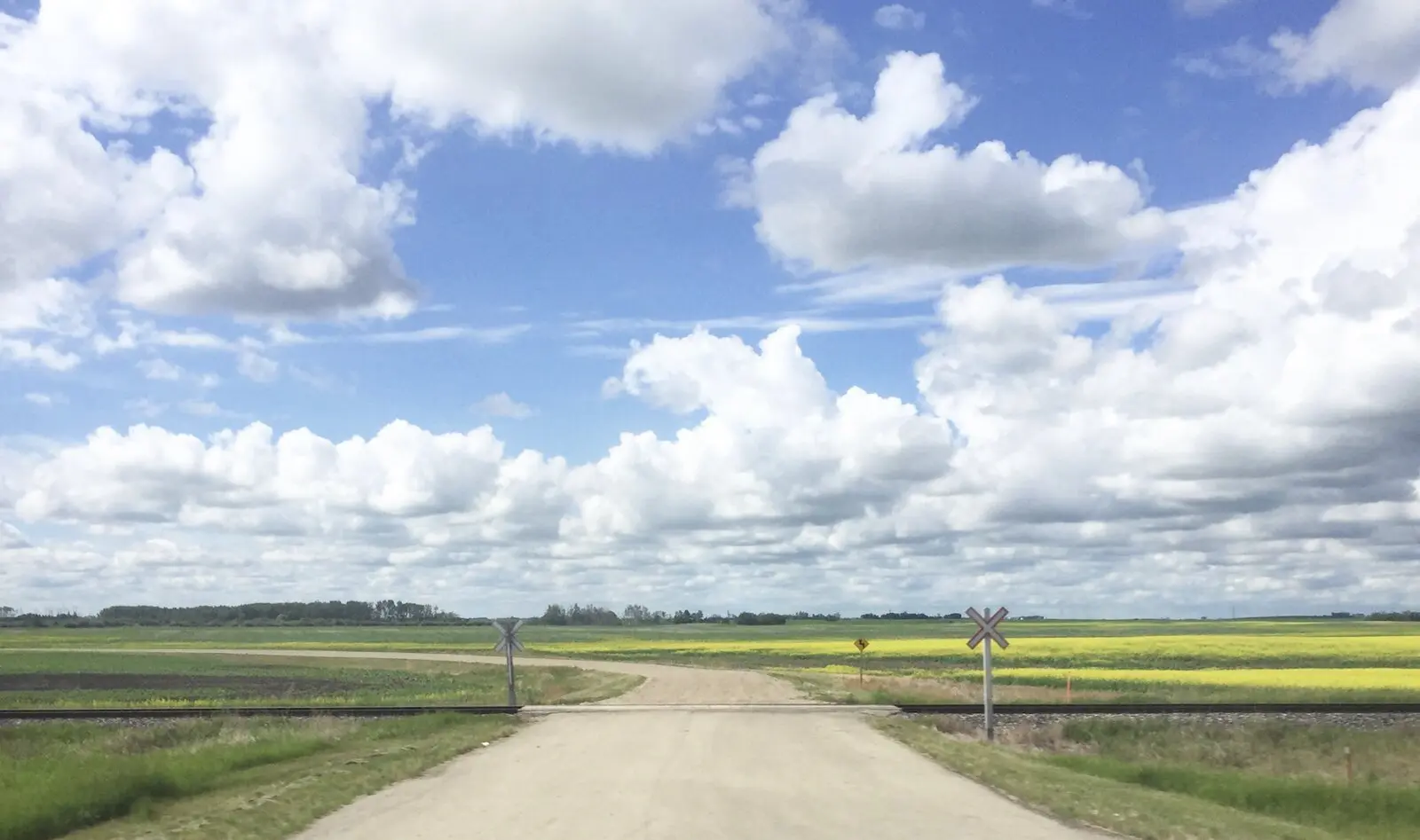
On my way out of Saskatoon, on a 16-hour bus trip to Winnipeg, I, too, would see the same landscapes captured in the museum: storms passing across the sky over unobstructed lands with infinite fields and occasional railroad crossings.
Reflecting on these few days in Saskatoon, we were pleasantly surprised by this city, which hasn’t made much of a name for itself on the Canadian tourism map. We came with no expectations and started on the wrong foot, but we enjoyed the local food scene, the jazz and live music culture, the beautiful riverside parks, and the many bridges connecting the two banks. Oh, right! THAT was the reason it was called the Paris of the Prairies: the many bridges.
I went on to learn more about Begonia and her success in the Canadian music scene, and I had the chance to see her perform live again when I lived in Montreal, but that’s a story for another time.